




Can Dogs Eat Apples?
Apples are one of those things most of us always have in the house. They last ages, unlike some fruit (we’re looking at you, strawberries), and they’re super easy to grab when you’re hungry but in a rush. And if you’ve got a dog nearby, we can probably guess they’re not far behind when food, even something healthy like an apple, is involved.
And as a responsible dog owner, you’re doing the right thing by asking questions like can dogs eat apples before sharing a few slices as a healthy dog treat. Because while they’re one of those foods we know are good for us, that doesn’t always mean the same applies to our dogs.
You might also have questions like can dogs eat apple skin or how many apple seeds will kill a dog? They’re good questions too, because while many fruits are safe for dogs, some should be avoided at all costs. So… which category does apple fall into?

Table of Contents
So, Can Dogs Eat Apples? Are Apples Good for Dogs? Health Benefits of Dogs Eating Apples Risks of Feeding Apples to Dogs Can Dogs Eat Apple Skin? How Many Apple Seeds Will Kill a Dog? Can an Apple Core Kill a Dog? What Happens if a Dog Eats an Apple Core? How to Prepare Apples for Dogs How Should I Give Apples to My Dog? How Many Apples Can Dogs Eat? Can Dogs Eat Whole Apples? What Kinds of Apples Can Dogs Eat? Can Dogs Eat Dried Apples? Can Dogs Eat Applesauce? Can Dogs Have Apple Juice? What About Feeding Apples to Puppies? What Should I Do if I Live Near Apple Trees? Can I Give My Dog Apple Cider Vinegar Every Day? How Do I Use Apple Cider Vinegar for My Dog? Should I Feed My Dog More Fruit? Conclusion: Can Dogs Eat Apple?
So, Can Dogs Eat Apples?
We have some good news, because yes, dogs can eat apples! For most pups, they’re a safe and simple treat that can be given now and then alongside their usual diet. They’re naturally sweet, easy to chew and something many dogs will happily take if offered.
That said, like anything outside of their normal food, apples should be treated as an occasional extra rather than something they have all the time. A few small pieces here and there are more than enough.
Are Apples Good for Dogs?
When people ask can dogs eat apples, the answer isn’t just yes, but it’s also that these delicious fruits are beneficial for them. In fact, apples can make great alternatives to higher-in-fat treats while also helping to mix up their diet should it have gotten a little repetitive.
Apples do contain natural sugars, so they’re not something to feed in large amounts, but in moderation, they can be a great addition alongside your dog’s usual diet. They’re also fresh and super easy to prepare which makes them useful for us dog owners too.
Health Benefits of Dogs Eating Apples
Apples might seem like a simple snack, but there’s actually quite a lot of good stuff going on once you look a little closer. When given in the right amounts, they can offer a few nice benefits alongside your dog’s usual diet, making them more than just something sweet to chew on.
One of the main positives is that apples come with a mix of nutrients that can support your dog’s overall health:
• Vitamin C - helps support the immune system and general cell function. Most dogs get what they need from their regular food, but this is still a nice extra boost.
• Vitamin A - supports eye health, skin condition and helps keep your dog’s coat looking its best.
• Fibre - apples are a good source of fibre, which can help with digestion and keep things moving regularly. This can be especially helpful for dogs with slightly sensitive stomachs.
• Natural sugars and carbohydrates - these provide a quick energy boost which can be handy before a walk or playtime.
Apples can also play a small role in dental health. The firm texture of apples can help gently clean your dog’s teeth as they chew which may help with freshness and general oral hygiene over time.
Another plus is that apples are a low fat dog treat and relatively low in calories compared to many shop-bought treats. So if you’re trying to keep things on the lighter side or our vet has suggested your pup needs to lose a little weight, but you can’t avoid the puppy eyes, they’re a nice option to have on hand.
Like anything, the benefits come from feeding the right amount. Too much can undo the good, but a few pieces here and there can be a great addition to your dog’s diet.

Risks of Feeding Apples to Dogs
Apples are generally safe for dogs, but there are a few things to be aware of before you start throwing an entire apple into their bowl. Thankfully, most of the risk doesn’t come from the apple itself, but from how it’s given and which parts are included.
One of the main things to watch is portion size. Apples contain natural sugars and fibre which are fine in small amounts, but too much in one go can lead to an upset stomach. You might notice things like loose stools or a bit of discomfort if your dog has had more than they should.
Another huge thing to keep in mind is how to serve apples to dogs. Giving large chunks, or even whole apples, can be a choking risk, especially for smaller dogs or those that tend to gulp their food a little too quickly. That’s why cutting them into manageable pieces is important to make things safer.
It’s also important to avoid certain parts of the apple. The seeds and core contain compounds that can be harmful in larger amounts, and the skin, while not toxic, can be tougher to digest for some dogs, especially if eaten in bigger quantities.
Can Dogs Eat Apple Skin?
This is a question that comes up quite a lot when people ask, can dogs eat apples, and the short answer is yes! Dogs can eat apple skin, but there are a couple of things to keep in mind.
Apple skin isn’t toxic and it actually contains some of the same nutrients as the flesh. That said, it can be a little tougher for some dogs to digest, especially if they’re not used to it or if they eat too much in one go. For some pups, this might lead to a bit of an upset stomach.
It’s also worth noting that apple skins can sometimes carry small traces of pesticides or dirt, so it’s always a good idea to wash apples properly before feeding them.
If your dog has a sensitive stomach, peeling the apple might be the safer option. Otherwise, leaving the skin on in small, manageable pieces is usually absolutely fine.

How Many Apple Seeds Will Kill a Dog?
In reality, it would take a very large number of apple seeds to cause serious harm to a dog. We’re talking far more than what your dog would realistically come across from the odd slice of apple.
Apple seeds contain a compound called amygdalin which releases cyanide when broken down in the body. Cyanide is toxic which is why you’ll often hear that apple seeds should be avoided. But the key thing here is quantity because a dog would need to eat a significant number of crushed seeds for it to become a real concern.
That said, knowing your dog’s body doesn’t benefit from them is reason enough to leave them out altogether. It’s an easy thing to avoid just by removing the core before feeding apples.
If you’re preparing apples properly and removing the core, you’re already doing everything right. And if a seed or two accidentally slips through now and then, it’s not something to worry about because it’s very unlikely to cause any harm.
So while apple seeds aren’t something you want to include in your dog’s diet, they’re also not something to panic over if a tiny amount is accidentally eaten.
Can an Apple Core Kill a Dog?
Much like apple seeds, this is one of those things that sounds worse than it usually is. An apple core isn’t something you want your dog eating, but it’s very unlikely to be dangerous in a one-off situation.
The main issue with an apple core is that it contains the seeds, which hold small amounts of amygdalin, a compound that can release cyanide when digested. On top of that, the core itself is quite firm and fibrous which can make it harder to chew and digest, especially for smaller dogs with smaller mouths and throats.
In reality, it would take a lot more than a single apple core to cause serious harm. If your dog manages to grab one, there’s no need to panic. That said, it’s best to avoid it where possible by removing the core before feeding apples, simply to keep things safe and easy on their digestion.

What Happens if a Dog Eats an Apple Core?
In most cases, probably nothing at all. If your dog manages to sneak an apple core, they’ll likely be absolutely fine, especially if it’s just the one.
You might notice a slightly unsettled stomach or a bit of a softer poo the next day, mainly because the core is quite fibrous and not the easiest thing to digest. But most dogs won’t react at all and will probably enjoy their snack without batting an eye.
That said, we don’t recommend giving them a full apple with the core included if it can be avoided. This part of the apple isn’t worth taking a risk on, even if you do feel lazy in the moment. If it happens accidentally though, it’s not a reason to panic. Just keep an eye on them and if at any point they do seems uncomfortable or act differently, there’s no harm in checking in with your vet for peace of mind.
How to Prepare Apples for Dogs
Getting apples ready for your dog is really simple but it does take a little more effort than just taking it out the fruit bowl and tossing it to them.
• Wash them properly: Give the apple a good rinse under cold water to remove any dirt, wax or pesticide residue from the skin.
• Remove the core: Cut around the core and discard it. This part is tougher to chew and contains the seeds, so it’s best left out.
• Take out any seeds: Even if you’ve removed the core, double check there aren’t any stray seeds left behind.
• Cut into bite-sized pieces: Slice the apple into small chunks that suit your dog’s size. This helps prevent choking and makes it easier to eat.
How Should I Give Apples to My Dog?
There are quite a few easy ways to give apples to your dog, so you can keep things simple or mix it up depending on what they enjoy.
The most straightforward option is to serve them raw, chopped into bite-sized pieces. This works well as a quick treat during the day or a little reward after a walk. If the weather’s a bit warmer, you can also try freezing those pieces, which turns them into a refreshing snack that lasts a little longer.
If you want something a bit more engaging, apples work really well with enrichment. You can mash them down and spread them onto a lick mat, or mix them with other dog-friendly ingredients. Apple pairs particularly well with xylitol-free peanut butter creating a slightly sweeter mix your pup will love.

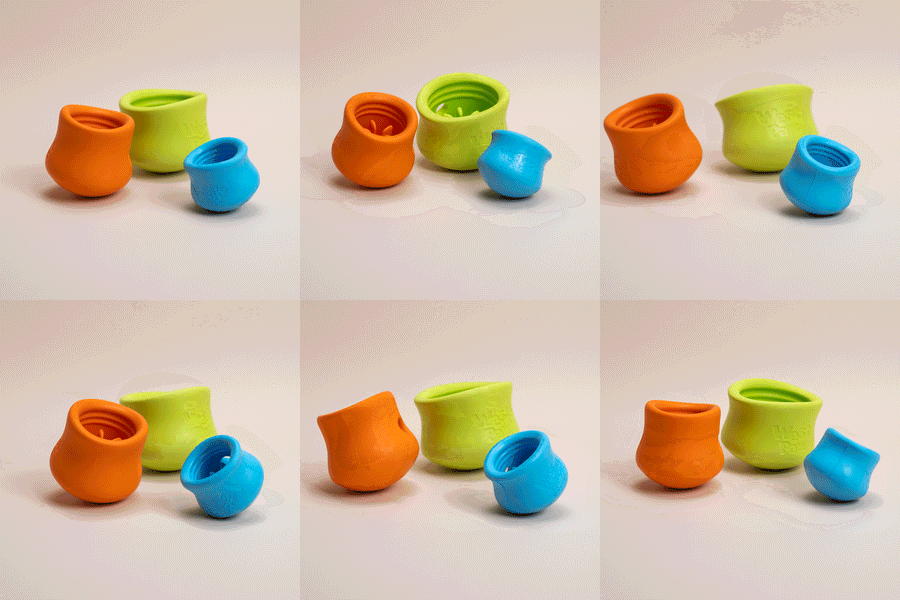
Another great option is to freeze that mixture into moulds and use it inside enrichment toys. The Woof Pupsicle is perfect for this, especially as it comes with a mould tray so you can make treats that fit the toy properly. It turns a quick snack into something your dog can really spend time on.
And of course, you can also find plenty of dog treats made with apple as a natural ingredient which can be a super convenient option if you don’t fancy prepping your own.
How Many Apples Can Dogs Eat?
When it comes to how many apples your dog can eat, it really depends on their size and how used they are to this kind of treat. Apples should always be an occasional extra, not something that replaces their normal diet.
For larger dogs like retrievers or labradors, a few slices is usually fine. Medium breeds might have a couple of pieces, while smaller dogs only need one or two bite-sized bits.
Can Dogs Eat Whole Apples?
It’s best not to give your dog a whole apple. While it might seem like a fun treat, especially for larger breeds, it comes with a few risks that are easy to avoid.
The main issue is the core and seeds, which you don’t want your dog eating. On top of that, a whole apple can be quite firm, making it harder to chew properly and increasing the risk of choking, particularly for dogs that tend to gulp their food.
Instead, we recommend breaking the apple down into small bite-sized pieces so that it is safer on their teeth, throats and stomachs.
What Kinds of Apples Can Dogs Eat?
Most types of apples are absolutely fine for dogs, whether that’s red, green, sweet or slightly tart. Your pup might prefer one type more than another, but they’re all safe to share as long as they’re prepared properly.
The key thing isn’t so much the type of apple, but how it’s served. As long as you’ve removed the stem, core and seeds, and cut it into bite-sized pieces, you’re good to go.
Can Dogs Eat Dried Apples?
Yes, dogs can eat dried apples, but they’re best given in smaller amounts than fresh ones because when apples are dried, the water content is removed which makes the natural sugars much more concentrated.
That means a small handful of dried apple can be the equivalent of quite a lot of fresh apple and too much can quickly lead to an upset stomach or just more sugar than your dog really needs.
Can Dogs Eat Applesauce?
Dogs can eat applesauce too, just so long as it’s plain and unsweetened. At its simplest, applesauce is just cooked apples which are perfectly safe for dogs.
The key thing to watch is what’s been added. Many shop-bought versions contain added sugar, sweeteners or preservatives, which aren’t suitable for dogs. Some can even include ingredients you’ll want to avoid completely so homemade is best.
Can Dogs Have Apple Juice?
Technically, yes, your dog can safely drink a small amount of apple juice. But it’s not something we’d suggest giving often and that’s because of the excess of sugar in there.
Apple juice is much higher in sugar than whole apples, especially shop-bought versions, and it doesn’t contain the fibre that helps balance things out. That means it can be a bit much for your dog’s system and doesn’t really offer any added benefit.
If your dog happens to have a small sip, it’s nothing to worry about. But as a regular treat, it’s best skipped in favour of fresh apple pieces instead.

What About Feeding Apples to Puppies?
If you’re also wondering can dogs eat apples when they’re still puppies, the answer is yes, they can, but it’s best to take things a little more carefully. Their digestive systems are still developing, so new foods should always be introduced slowly and in small amounts.
Start with a tiny piece of apple and see how they get on before offering more. Make sure it’s been properly prepared, with the core, seeds and any tough bits removed, and cut into very small, manageable pieces to avoid any choking risk.
Like adult dogs, apples can be a healthy treat for puppies, but they shouldn’t become a regular part of their diet just yet. At this stage, their main focus should be on a balanced puppy food, with extras like apple kept as an occasional addition.
What Should I Do if I Live Near Apple Trees?
If you live near apple trees, it’s worth keeping a bit of an eye on your dog when they’re outside because we have no doubt those fallen apples will be tempting. And while a little nibble here and there isn’t anything to worry about, we don’t want them overeating and making themselves sick.
Additionally, apples on the ground can go rotten pretty quickly which means they can ferment and produce small amounts of alcohol. As you can expect, this isn’t good for dogs and can lead to stomach upset or worse if eaten in larger amounts. There’s also the risk of them eating the core and seeds when they’re on the ground too.
If you have apple trees at home, try to clear fallen fruit regularly and keep an eye on your pup while they’re exploring.
Can I Give My Dog Apple Cider Vinegar Every Day?
Apple cider vinegar is one of those things you’ll see mentioned a lot in dog care, and yes, it can be used for dogs, but it’s not something to overdo.
When used properly and in small amounts, it’s thought to offer quite a few benefits. Some dog owners use it to support digestion, help with itchy skin or even as a mild flea and tick deterrent. It’s also sometimes used, when diluted, for things like ear cleaning or general coat care.

That said, always be mindful of dosage and dilution. Apple cider vinegar should never be given on its own. Instead, you’ll want to add very small amounts, around 1/4 to 1 teaspoon, mixed into food or water depending on your dog’s size. Too much can irritate your dog’s stomach or mouth, so it’s best to keep it minimal.
If you do decide to use it, go for a raw, unfiltered apple cider vinegar and follow guidance on the bottle and from your vet.
How Do I Use Apple Cider Vinegar for My Dog?
If you decide to use apple cider vinegar, make sure to keep it diluted and minimal. For feeding, you can mix a small amount, usually around 1/4 to 1 teaspoon, into your dog’s food or water, depending on their size.
For external use, it should always be diluted with water before applying to the skin or coat. Some owners use it as a light rinse for itchy areas or to freshen up their dog’s coat. As with anything new, start small and see how your dog reacts before using it regularly.
Should I Feed My Dog More Fruit?
Fruit can be a really good addition to your dog’s diet, but we always say it’s more of an addition, rather than something to replace their normal food. And of course, it’s important to know which fruits are safe for dogs since not all of them are.
Some dog-friendly fruits include:
• Bananas - soft and easy to digest, but higher in sugar so best in small amounts
• Blueberries - great as a bite-sized treat and easy to feed
• Strawberries - naturally sweet and refreshing, especially in warmer weather
• Watermelon (seedless) - high in water, making it a good hydrating option
• Pears (with seeds and core removed) - another juicy, gentle option
As with everything, it comes down to moderation and preparation. And if you’ve been wondering can dogs eat apples, they can absolutely be part of that mix, as long as they’re given safely and in the right amounts.
Conclusion: Can Dogs Eat Apple?
So, can dogs eat apples? Yes, they can. And for most dogs, they’re a really nice, simple treat to add into the mix, as long as they’re prepared properly and given in the right amounts.
We’ve covered everything from portion sizes to prep, and even the bits to avoid. Questions like can dogs eat apple skin come up a lot, and while it’s generally fine, it’s always worth keeping your dog in mind and doing what suits them best. And when it comes to things like how many apple seeds will kill a dog, the reality is it would take a lot, but it’s still something you’re better off avoiding altogether.
At the end of the day, apples are one of those easy treats for every now and then. They’re already in the house, they’re quick to prepare, and most dogs are more than happy to help you finish one off.

Yes, dogs can eat apples, and for most pups they make a safe, low-fat treat when served in small, bite-sized pieces.
Always remove the core and seeds first, keep portions sensible, and be mindful that too much apple can upset your dog’s stomach.
Fresh apple is usually best, but apples can also be frozen, mashed onto lick mats or added to enrichment toys for a more fun treat.

The Author: Charlotte Harris
Charlotte has been a writer and dog owner her whole life, so combining these two things together is a dream come true. Her greatest love is her oversized Golden Retriever, Milo, who has a love of tough chews and anything filled with peanut butter!
If you liked this blog, you'll also like...
Pancake Recipe for Dogs: Celebrate Pancake Day with Your Pup!
5 Easy Frozen Dog Treat Recipes to Keep Your Dog Cool This Summer
Can apples help with my dog’s bad breath?
They can help a little, yes. The crunch of apple can gently clean the teeth as your dog chews, which may freshen their breath slightly. It’s not a replacement for proper dog dental care but it can be a nice added bonus alongside brushing or dental treats.
Can apples help with my dog’s weight?
They can be a good swap if you’re trying to cut back on higher-calorie treats. Apples are low in fat and relatively low in calories, so they’re a lighter option. Just keep portions sensible, as they still contain natural sugars and too much could end up working against you.
Do apples need to be peeled for dogs?
Not always. Most dogs can eat apple skin just fine, especially if the apple has been washed properly. That said, if your dog has a sensitive stomach, peeling the apple can make it easier to digest and reduce the chance of any mild upset.

