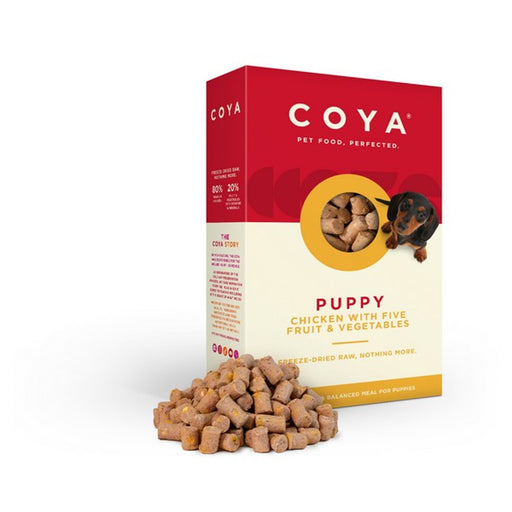
The right amount of food depends on your puppy's age, breed, size and the specific food you're using. Because puppies grow at very different rates, the most reliable starting point is always the feeding guide on your chosen puppy food packaging, which will give portion guidance based on your puppy's weight. As a general principle, you should be able to feel your puppy's ribs without pressing hard, but they shouldn't be visibly prominent. Overfeeding during puppyhood, particularly in large breeds, can put unnecessary strain on developing joints and bones, so accuracy matters. It's also important to factor in any puppy treats used during training sessions, as these contribute to daily calorie intake. If you're ever unsure, your vet is the best person to advise on portions specific to your puppy's breed and growth stage. Using a slow feeder bowl can also be a good idea for fast-eating puppies, as it extends mealtimes and supports better digestion.